For the children in our partner shelters, healing and growth are built not only through care, but through the steady rhythm of ordinary days.
A typical morning begins early.
Some of the children help the shelter leaders prepare breakfast, learning practical skills as they work together in the kitchen. Others begin the simple routines that shape the start of every day: folding up their bedding neatly — including their mattresses — organizing their belongings along the wall, and sweeping the floor so the space is ready for the activities that will come later.
The older children naturally keep an eye on the younger ones, helping them get ready and making sure everyone is prepared for school.
When everything is in order, the children gather together to eat breakfast. Before leaving, they pause to pray.
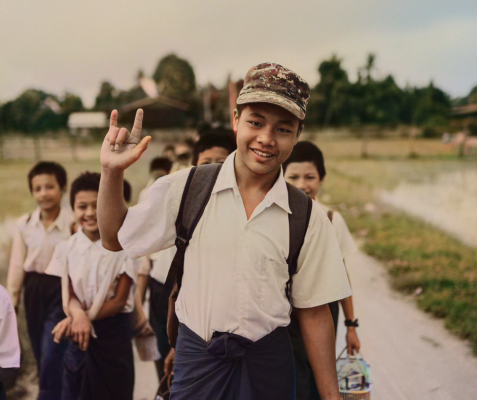
Then they line up — dressed in their best clothes for school, backpacks on their shoulders — and begin the walk together.
They walk in a single line through the neighborhood, along clean roads and narrow alleys shaded by bougainvillea and tall trees. The older children watch over the younger ones as they go. The line stays together until they reach the school gate, where teachers welcome them for the day.
No one is left behind.
In the afternoon, the children return to the shelter and gather in the courtyard beneath the shelter roof. A carpet is rolled out across the ground so everyone can sit together and begin their homework.
Again, the older students help the younger ones when they need it. Learning is something they share.
When the work is finished, the group gathers for a short Bible devotion. Afterward, the carpet is rolled up and stored away to keep it clean for the next day.
Then the courtyard fills with the sounds of play.
Some of the children practice singing or playing music. Others gather in a circle to play one of their favorite games — kicking and volleying a soccer ball back and forth as everyone laughs and calls out encouragement.
Meanwhile, the kitchen team helps prepare the evening meal and sets the long table where everyone will eat together.
Dinner is shared as a family.
After the meal, the courtyard is tidied, the children wash up, and the evening routines begin. Bedding is laid out again, and the boys and girls settle into their separate rooms where mattresses line the floor side by side.
The day ends the way it began — together.
These routines may seem simple, but they form the foundation of something deeply important: stability.
For children who once lived with uncertainty, the steady rhythm of daily life creates a place where trust can grow, friendships deepen, and hope begins to take root.
It is within these ordinary days that extraordinary transformation quietly unfolds.